Mikado
for E. And M.
You come across an empty bottle at the back of the cupboard where random things are kept for later. You have been meaning to photograph it, though you are no longer sure why you would bother. The glass is dusty now, lighter than you expected it to be, its presence, somehow, disproportionate to the emptiness it contains.
You remember that it struck you as a strange wine, a little too sweet. Maybe even slightly off-register. Without pedigree, reassurance and a famous name attached to it; with no authority behind it. It asked very little of you and gave nothing that you could neatly describe, and you liked it for that, although you did not know this at the time.
The label has patterns and symbols; a Cyrillic script that even then refused translation. It might have been Ukrainian. It might not. The origin was never settled and neither were you fully convinced that what you were tasting was wine at all, as it behaved more like a liqueur with its Japanese plum, sweet almond and the faint bitterness of crushed fruit stones. The label reads eleven per cent alcohol. Eleven-ish is what you recall, though you are pretty sure you never looked it up before; it was hidden inside all that sweetness, yet it was enough to tint your cheeks, enough to loosen the evening into something unplanned.
You drank it without ceremony, standing in the kitchen, while the bottle passed back and forth, filling the slightly nicked glasses with an ease that suggested repetition, even though you knew that this particular moment would not repeat itself or at least not in this tiny kitchen, nor with this version of yourself. You were not certain of what you were tasting and neither was anyone else. This uncertainty pleased you more than it should have. You noticed that and, in a way, it felt safe.
You remember thinking briefly that it was cheap, though every sip left you craving more. You have never found out its price and you have never checked whether it could be bought again or whether it existed anywhere beyond that evening. What mattered was the bottle with its peculiar shape, the empty tabouret, the laughter, and the way the plum returned after you thought it had gone.
You now live somewhere else. The wines here are impeccable by every accepted measure. You raise standardised glasses one-third full of wine and you taste them as you were taught. They come with histories you trace and with names you can pronounce. They arrive with confidence heightened by classifications you ought to respect. Yet, they rarely surprise you.
The bottle in your hands offers none of that. It offers only the memory of a room that no longer exists in the same way and a reminiscence of voices that have dispersed into other lives. You cannot recreate that evening. Nor would you dare. You simply acknowledge that it happened, that it mattered, and left behind this object you could not quite bring yourself to throw away.
You rinse the bottle eventually. The water smells softly sweet as it runs out and it spreads pale washes across the sink like aquarelles on damp paper. You place the bottle back where you found it.
It has done what it came to do.
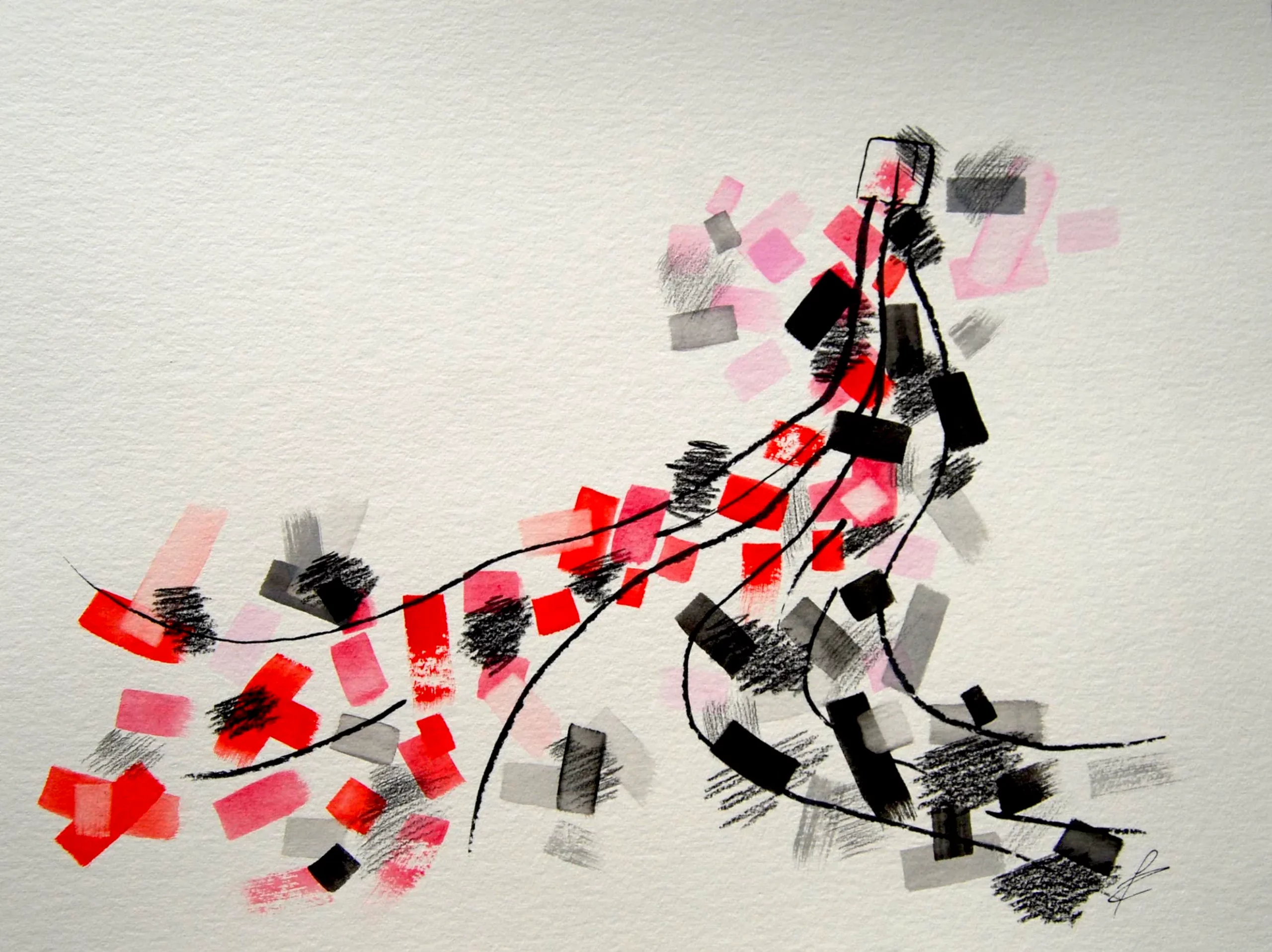
Editorial Note: Originally written in Polish and published in January 2014, “Mikado. W królestwie japońskiej śliwki i migdałów”. Rewritten in English and republished in the late 2014/early2015. This story is a recollection of real experiences. It has been fictionalised for narrative purposes.
Artwork: mixed media on watercolour paper © 2025 Grand Cru Experience™.